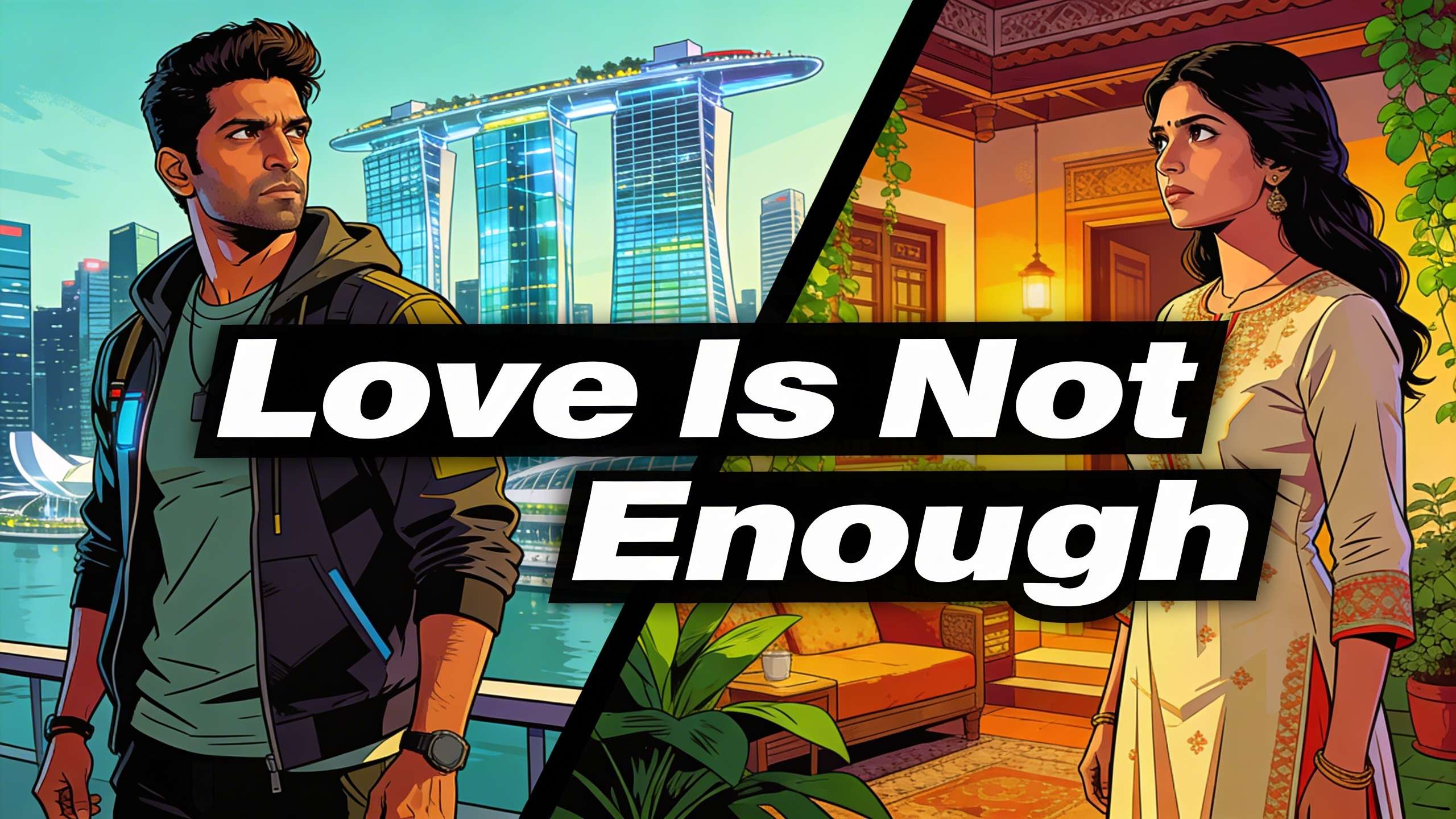
The 3 AM question keeping you awake
It is 3 AM. You are lying awake next to your partner, staring at the ceiling fan spinning in the dark. They are wonderful—kind, supportive, and your families even get along. But a quiet, nagging voice in your head whispers: "Is this it? Is this the one? Or am I settling?"
If this sounds familiar, you are not alone. Welcome to the exhausting mind game of relationship optimization, where every partner is measured against an imaginary perfect scorecard. This anxiety is common among modern Indian couples who are torn between traditional expectations of stability and modern desires for a cinematic romance. But here is the hard truth: that constant questioning is often what kills your chance at real love, not the person sleeping next to you.
We live in an era where we are told we can have it all. We want the stability our parents had, but we also want the fireworks we see in movies. When reality falls short of this impossible standard, anxiety sets in. You start wondering if there is someone out there who is just 10% funnier, 10% more ambitious, or 10% taller. This line of thinking is a trap. It keeps you one foot out the door, preventing the very intimacy you are craving.

The myth of "the one"
We have been raised on a steady diet of Bollywood movies and fairytales that tell us there is one perfect person out there destined for us. We believe that when we meet them, violins will play, and everything will click into place effortlessly. This myth is dangerous because it sets us up for failure. When the initial spark fades or when you have your first big fight about finances or family, you panic. You think, "If they were the one, this wouldn't be so hard."
Here is the reality: there is no single "one." There are thousands of people you could be happy with, and thousands you would be miserable with. The difference isn't finding someone who comes pre-packaged as perfect. It is choosing someone good and building something great together. Real love is a choice you make every day, not a lottery ticket you find.
Consider Rahul and Priya. They met through a semi-arranged setup. On paper, Rahul wasn't Priya's usual "type"—he was quieter and more introverted than the guys she usually dated. But her parents saw shared values and mutual respect. Five years later, they have the kind of partnership Priya's friends envy. Not because Rahul was perfect from day one, but because they committed to building a life. They didn't find "the one"; they became "the one" for each other.
Optimization culture: Dating as shopping
Modern dating apps have trained our brains to think of relationships like online shopping. If you don't like the color or fit, you can just return it and get something else. This "optimization culture" makes us believe that a better option is always just one swipe away. We become terrified of committing because we worry we might miss out on someone slightly better.
Take Arjun's story. He left a stable, three-year relationship because his girlfriend didn't check every single box on his list. She was caring, funny, and loyal—but he kept thinking, "What if there is someone more ambitious? Someone more adventurous?" He has been dating for two years since then, and every new person has their own set of flaws. He is starting to realize that the problem wasn't his ex. It was his endless desire to optimize for a perfection that doesn't exist.
This mindset keeps you stuck in the shallow end of the pool. You never dive deep enough to build true intimacy because you are always scanning the horizon for the next best thing. You end up trading 80% compatibility for the hope of 100%, often ending up with nothing. Instead of constantly evaluating your partner against a checklist, try focusing on understanding them. Tools like BaeDrop can help you discover compatibility on dimensions that actually matter—like values and communication styles—rather than just surface attraction.
Settling vs. healthy compromise
So, does this mean you should stay with anyone just to avoid being alone? Absolutely not. There is a massive difference between settling and healthy compromise, and knowing the distinction is crucial.
Settling happens when you ignore fundamental incompatibilities or red flags. It is staying with someone who doesn't respect you, doesn't share your core values, or treats you poorly because you are afraid of being single. Settling is ignoring your gut instinct that says you are unsafe or unvalued. According to The Knot's Relationship & Intimacy Study, common relationship deal breakers include lack of trust or honesty (63%) and poor communication (59%). If you are facing these issues, that is not compromise; that is settling.
Healthy compromise, on the other hand, is accepting that your partner is a human being with flaws. Maybe they aren't as tall as you hoped, or they have a weird laugh, or they aren't as organized as you are. These are not deal-breakers; they are the price of admission for intimacy. If you are struggling to tell the difference, our guide on healthy challenges versus toxic patterns can help you gain clarity.
Want to discover what makes your relationship unique?
Download
BaeDrop



What actually predicts happiness
If perfection isn't the goal, what should you look for? Science has some surprising answers. It turns out that who you are with matters less than how you build the relationship together.
A massive study analyzing 43 datasets and over 11,000 couples found that the experience of the relationship predicts satisfaction more than individual characteristics. In other words, having a partner with a perfect résumé or stunning looks doesn't guarantee happiness. What matters is the dynamic you create—how you handle conflict, how you support each other, and the responsiveness between you. This is why we often emphasize research-backed secrets to lasting love that focus on interaction rather than selection.
Another key factor is feeling understood. Research shows that feeling known by your partner predicts relationship satisfaction more than feeling like you know them. It is about emotional safety and the feeling that your partner "gets" you. If you have that foundation, you can build the rest. Furthermore, longitudinal studies suggest that couples with high initial and stable relationship satisfaction report better mental health over time, proving that investing in the right dynamic pays off in every area of life.
The Indian context: Family vs. feelings
For Indian couples, the pressure to find "the one" is often compounded by family expectations. You aren't just choosing a partner for yourself; you are choosing a son-in-law or daughter-in-law for your parents. This can lead to a unique type of anxiety where you worry if you are settling for your family's happiness at the expense of your own.
It is a delicate balance. While family approval is important in our culture, it shouldn't be the only metric. You are the one who has to wake up next to this person every day for the next fifty years. If you are in an arranged marriage setup or a serious relationship, look beyond the biodata. Do you laugh together? Can you talk about your fears? Do you have a shared vision for the future?
Remember, a "good match" on paper doesn't always translate to a good marriage. Prioritize the connection you feel when the parents aren't in the room. That is where your real life happens. Don't let the pressure to please everyone else drown out your own intuition about the person sitting across from you.

Tools to focus on what matters
Instead of obsessing over whether your partner is perfect, shift your focus to deepening the connection you have. The grass is greener where you water it. Start asking better questions. Move past "how was your day" and explore your partner's inner world.
If you are looking for ways to strengthen that bond, check out our article on building real couple goals that go beyond Instagram likes. Focus on shared experiences and mutual growth. When you understand your partner's love language or their hidden dreams, you often realize that what you have is far more valuable than what you thought you were missing.
Conclusion
The fear of settling is often just a fear of commitment in disguise. It is easier to keep looking for perfection than to do the hard, messy work of loving an imperfect person. But real love isn't found; it is built. It is forged in the moments when you choose each other despite the flaws.
So, stop overthinking and start building. Look at the person in front of you not as a finished product you are buying, but as a partner you are building a life with. If there is respect, trust, and a willingness to grow, you aren't settling. You are just getting started.
Ready to put these insights into practice with your partner?
Download
BaeDrop