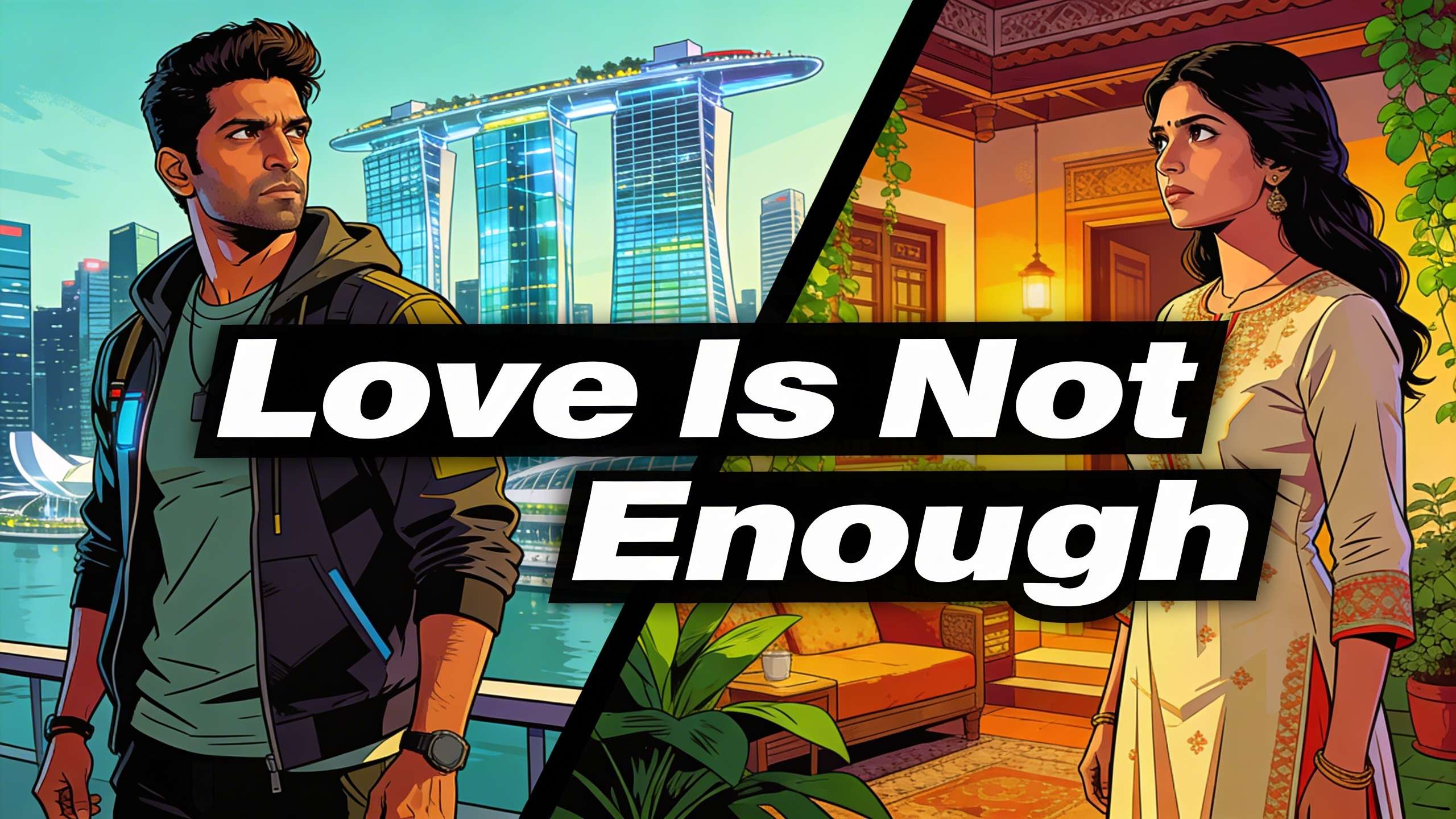

The spark is real, but the fights are too
You finish each others sentences. You laugh at the same jokes. When youre together, time disappears. The chemistry? Off the charts. It feels like a Bollywood romance, doesnt it? But heres the thing nobody talks about: you fight about literally everything else.
Whos paying for dinner (again). Whether to go out or stay in. How clean the apartment should be. When to visit the in-laws. Money. Future plans. Everything feels like a battle, even when youre madly in love. Its like your hearts are in sync, but your daily lives are playing different tunes.
Wait, isnt good chemistry supposed to make relationships easy? Nope. Thats the myth. Chemistry is about attraction and spark—how you feel when youre together. Its the initial sizzle. Compatibility is about function—how well you actually work together when life gets real, when the honeymoon phase fades, and youre left with the daily grind.
A lot of couples have crazy chemistry but zero compatibility. And thats a recipe for exhaustion, not lasting love. Its like having a super-fast car with no fuel – looks great, but wont get you anywhere. Lets break down what compatibility actually means and how to know if youve got it.

Chemistry vs. compatibility: whats the real difference?
Think of chemistry as the initial fireworks. Its the butterflies in your stomach, the instant connection, the feeling that youve known them forever. Its exciting, its intense, and its what often draws us to someone in the first place. Chemistry is crucial for that initial spark, making you feel seen and desired, but its a feeling, not a foundation. Its the delicious aroma that pulls you into the kitchen.
Compatibility, on the other hand, is about how well your lives actually blend. Its whether your daily rhythms sync, if you want the same big things in life, and how you handle the inevitable bumps in the road. Its less about the wow factor and more about the how factor – how you navigate life as a team, day in and day out. Its about whether you both agree on what to cook, who cleans up, and if you even like the same spices.
You can have incredible chemistry with someone who wants kids while you dont, whos a night owl while youre a morning person, or who spends freely while you save every rupee. The spark is real, but the daily grind? Thats where compatibility steps in. New research identified 24 ways couples can be compatible, with similarities in lifestyle, opinions, and morals emerging as the most important factors for long-term relationships. Its about finding someone whose puzzle pieces fit yours, even if theyre not identical.
The 5 compatibility dimensions Indian couples should test
For Indian couples, compatibility goes beyond just personal preferences. It often involves navigating family expectations, cultural nuances, and societal pressures. Its not just about you two; its about blending two worlds. Here are five key dimensions to explore, with a desi twist:
1. Values alignment: what truly matters to you?
This is about your core beliefs and what you hold sacred. Do you both value tradition or lean more modern? What are your views on spirituality, honesty, community, and respect for elders? If one partner prioritizes family above all else and the other values individual freedom and career growth equally, there could be friction. Discussing these early helps you understand if your moral compasses point in similar directions. Its about knowing if you both believe in the same sanskars, even if you express them differently.
2. Lifestyle sync: how do you live your daily lives?
Are you both social butterflies who love weekend parties, or do you prefer quiet evenings at home with a good movie? Do you love to travel or prefer quiet weekends? What are your habits around cleanliness, food preferences (vegetarian vs. non-vegetarian, home-cooked vs. eating out), and fitness? These seem small, but daily differences can build up into major annoyances. For instance, if one loves a bustling joint family setup and the other dreams of a quiet nuclear home, thats a big lifestyle difference that needs addressing. Imagine one wanting to host a Diwali party every year, and the other dreading it – thats a lifestyle clash!
3. Conflict resolution style: how do you fight fair?
Every couple argues. Its not about avoiding fights, but how you handle them when they inevitably arise. Do you both prefer calm discussions, or does one need space to cool down while the other wants to resolve things immediately? If one person shuts down and gives the silent treatment while the other escalates with shouting, its a recipe for unresolved issues and growing resentment. Understanding how you both approach disagreements is vital for healthy communication. According to Gottman Institute research, 69% of relationship problems are perpetual, meaning you need to learn to manage them, not eliminate them. Its about finding a rhythm for reconciliation, not just avoiding the storm.
4. Family dynamics compatibility: blending two worlds
This is huge for Indian couples, where families are often deeply intertwined. How much involvement do you expect from in-laws? What are your traditions around festivals, family gatherings, and financial support for parents? If one partner expects weekly visits to their parents and the other prefers more independence, it needs open discussion. Its about understanding the unspoken rules and expectations of both families and finding a way to honor them without sacrificing your own relationship. Remember, understanding your love languages and how they shape connection can also bridge gaps in family dynamics, helping you express affection in ways your partner (and their family) truly feels.
5. Future vision alignment: where are you headed?
Do you both want kids? If so, when and how many? What are your career aspirations – do you support each others ambitions or do they clash? Your financial philosophies – are you a saver or a spender? Where do you see yourselves living in 5, 10, or 20 years? These long-term goals need to be in sync. Studies show that people prefer similarity in characteristics important for raising children, with long-term relationships prioritizing similarities in lifestyle, morals, and values. Its about ensuring youre both building towards the same dream home, not two different ones.

Why arranged marriages sometimes get this right
Okay, real talk: arranged marriages often get a bad rap in the modern dating world, especially when compared to the romantic ideal of love marriages. But heres an interesting perspective: they often prioritize compatibility factors from the get-go. Its like building a house from the foundation up, rather than starting with the fancy decor.
Parents and matchmakers typically look at family background, financial stability, educational alignment, and shared values before chemistry even enters the picture. Theyre essentially doing a compatibility check before the couple even meets, focusing on the practical aspects that make daily life function smoothly. This isnt to say love marriages are wrong or that arranged marriages are always right. Both have their strengths and challenges, and both can lead to incredibly fulfilling partnerships.
The strength of arranged marriages lies in building a foundation on shared life goals and family expectations, which can lead to a stable, secure partnership. The challenge is often the initial lack of intense emotional connection or spark, which then needs to be nurtured. Love marriages, conversely, start with that intense chemistry but sometimes forget to build the compatibility foundation until problems arise, leading to a beautiful but shaky structure.
Want to discover your unique compatibility patterns together?
Download
BaeDrop


Red flags: when youre not compatible
So, how do you know if your compatibility is actually struggling? Its not always obvious, especially when the chemistry is still strong. Here are some red flags to watch out for that might signal deeper issues:
Constant irritation over small things
If every little habit your partner has—how they chew, how they leave their clothes, their driving style, or even how they talk to their family—starts to annoy you constantly, it might be more than just a bad mood. These daily frictions, if persistent, can be signs of deeper incompatibility in lifestyle or values. Its like a tiny pebble in your shoe that eventually becomes a huge blister.
Fundamentally different life goals
You want to move abroad for your career, they want to stay close to family. You dream of a big family, theyre happy with just the two of you. You want to save for a house, they want to spend on experiences. These arent minor disagreements; theyre fundamental differences in your lifes direction that can cause major heartache down the line. Its like trying to drive to Mumbai when your partner is set on going to Delhi.
Unresolvable conflicts: same fights, different day
Every couple has conflicts, but if youre having the same arguments over and over again without any resolution or progress, its a sign. This often points to a clash in conflict resolution styles or deeply ingrained personality differences that you havent learned to navigate together. Its like being stuck in a loop, replaying the same scene with no ending. Understand the line between healthy relationship challenges that build compatibility and toxic relationship patterns that destroy it.
One person always compromising
In a truly compatible relationship, compromise is a two-way street. Its about give and take, finding a middle ground where both partners feel heard and valued. If one partner consistently gives in, changes their plans, or sacrifices their desires to keep the peace, it leads to resentment. This imbalance is a huge red flag that your needs and preferences arent being equally met or valued. Its not sustainable, and eventually, that resentment will boil over.

Testing compatibility before its too late
The good news? Compatibility isnt just fate; its discoverable. You dont have to wait for problems to arise to figure out if youre a good fit. Think of it as proactive relationship health. Start by having intentional, honest conversations about those five dimensions we discussed earlier. Talk about your values, your ideal lifestyle, how you handle stress, your family expectations, and your future dreams. Dont shy away from the tough topics; theyre the most important ones.
Observe each other in different situations. How do they react under pressure? How do they treat service staff? How do they interact with their family? How do they handle a bad day? These real-life scenarios reveal more about a persons true compatibility than a perfect date ever could. And remember, compatibility isnt about being identical twins; its about having enough alignment in key areas and a willingness to understand and respect differences. Its about finding someone whose differences complement yours, rather than constantly clashing.
Tools like BaeDrops Magic Mirrors can help you discover your own patterns and preferences, making compatibility conversations easier and less confrontational. Its about understanding yourself first – your quirks, your needs, your desires – which then helps you understand how you fit with your partner. It takes the guesswork out of the equation and gives you a fun, insightful way to explore your connection.
Conclusion: beyond the spark, build the foundation
Chemistry is the exciting beginning, the initial love at first sight moment. But compatibility is the lasting story, the quiet comfort, the shared vision, and the ability to navigate lifes challenges as a united front. Its the difference between a fleeting romance and a lifelong partnership. For young Indian couples, understanding and actively building compatibility is key to moving beyond the initial spark and creating a relationship that truly stands the test of time. Its about building a home, not just a beautiful facade.
Curious about what makes you tick in relationships? Discover your compatibility patterns with BaeDrops Magic Mirrors—because understanding yourself is step one to finding your perfect match.
Ready to put these compatibility insights into practice?
Download
BaeDrop